Summary:
- Creating an undesired product is a wasteful practice that can stem from various reasons, among them being the creator’s ego.
- Sometimes we confuse our ego with empathy and assume that we know what our customers want without checking if it aligns with their actual needs.
- Making decisions based on ego can lead to success by chance, rather than by understanding the users’ preferences and needs through empathy.
- Regrettably, society tends to recognize and admire those with a large ego who have been fortunate, rather than valuing user knowledge and empathy.
Parable
A garage door opener company has a problem. Recently their key supplier has stopped making the electronics board they have been using for years on their garage door openers. The supplier has replaced the board with one that comes with Wi-Fi but it is more expensive. The leadership sees this as an opportunity. There have been a lot of successful smart app products in the market and they can use the new electronics to create a new smart app door opener. The smart app removes the need to produce a remote door opener because the app can connect via Wi-Fi and open the door remotely. This will offset the new increased costs of the door opener electronics, and they could even charge a premium or subscription for the application.
A tech-savvy son buys his parents the new Smart-App Garage Door opener as a present and installs it for them. He is pleased with being able to help them out until he gets a call from his father later that day:
Dad: “How is this stupid thing supposed to work? I can’t get into the garage.”
Son: “Open your phone and click open in the app.”
Dad: “Which app I have like 10 of these smart app thingies.”
Son: “It says Elite Connect.”
Dad: “Oh I think I found it… um gotta go the police are pulling me over.”
The dad gets a $1000 ticket for using his phone on the road, and the son makes the situation worse not better. The product that was released seemed to meet the current market demand. Smart device + smart app = profit. But it never met the consumers’ need, a simple button that was legal to push while driving up to their house.
Product Problems
In product design, it is common for a company to focus on what it can provide and what the market is doing rather than focus on its customers. The resulting products don’t meet our needs, and as consumers, we scrunch our noses up as though we’ve smelled something bad. We may not always know why we think the product is a bad idea, but we know right away it won’t work. Somehow the companies wasted their time building unnecessary products, if you watch Shark Tank on TV you’ve seen plenty of these products.
How come the product designers didn’t know?
There are too many sources for bad products to put into one article. In this article, let’s focus on the ones described in the parable.
- Adding an app to your product. – aka Do what everyone is doing.
- The company has existing resources (teams, software, hardware) – aka When you have a hammer, everything looks like a nail.
Do what everyone is doing
Just because it is working, or seeming to work, for someone else doesn’t mean that will work for you. The thought process goes like this:
Company X is successful in the market with product X. If we make a product like X we will be a successful company.
To write this is logic terms: if A then B therefore if B then A (A->B, B->A). This is a logical fallacy known as “affirming the consequent”. An example of this is:
If the animal is a dog, then it has four legs.
If my cat has four legs, then it is a dog.
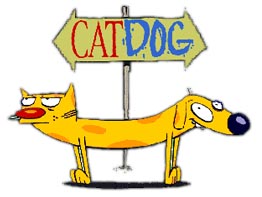
The success of a company’s product has a lot more to do than its set of features. The environment in which the product is released is a huge factor in its success. The state of competition and the economy are not things that can be copied but should be considered in any product development.
In addition often what is valued by the customer is not included in the product’s technical specifications. Users may like a watch not because of the features but the status of wearing it.
When you have a hammer, everything looks like a nail
Abraham Maslow wrote, “If the only tool you have is a hammer, it is tempting to treat everything as if it were a nail.” This highlights a cognitive bias we all have when it comes to solving problems, we rely on what we know and what we have. Engineers get used to solving problems with the tools they have on hand. We like figuring out how to do something awesome with what’s available to us. This scene from the movie Apollo 13 is one of my all- time favorite’s and still remains the template for what my dream job would look like:
Give me a box of parts, ask me to innovate with it, and the resulting product matters. Reuse for innovation can be great for efficiency. However, if you are building without the end user in mind you can end up with waste. No one would care about what was done above if it wasn’t needed to save lives.
Often established companies have lots of teams and tools that are their proverbial box of parts. The problem is sometimes we don’t know what the customer/user wants us to do with them. Even when engineers don’t have time to experiment in their jobs they want to see what is possible with the tools they were given. An engineer can frequently go off on the weekend or on their own time and build something new with the tools on hand. Innovation and learning are NOT bad, but when it gets put into a product because the functionality now exists and not because a user wants it, is a form of waste.
A new kind of waste.
What is waste? For the context of this conversation, waste means: doing something in your business that doesn’t add value. Lean manufacturing highlights eight kinds of waste to be removed, which is remembered through the acronym: TIMWOODS or:
- Transport
- Inventory
- Motion
- Waiting
- Overproduction
- Overprocessing
- Defects
- Skills (underutilizing skills).
Finding and removing these wastes from manufacturing or product development processes is extremely useful in increasing the efficiency of an organization.
How does the waste we have been talking about fit into this acronym? It could be categorized as overproduction, but we aren’t producing too much of a product we are creating a new product. An unwanted product is a less effective, not a less efficient, production of a product. In the scenarios above, an unwanted product was created because the company had the ability to make it, and it seemed to be what competitors were doing. The attitude is, “If we can build it, they will want it.” That attitude is ego
Ego is the driver of waste:
- When we think we know what the customers want better than they do and we don’t bother to ask them, that’s ego.
- When we think what we built is awesome, therefore, our users will think it is awesome; that’s ego.
- When we think we can build an existing product better than the market leader by copying them, that’s ego.
Ego Waste inside a product
Ego waste doesn’t always show up in the form of a huge product that isn’t useful, but it can show up in valuable products that are badly built. The product creators think about what they think the product should be and assume everyone should think like them. This attitude is common enough amongst software engineers there is an acronym for it: PEBKAC, which stands for Problem Exists Between the Keyboard and Computer, aka user error. Software developers will laugh at users for their silly problems, why didn’t they click on the three dots in the corner, put in the right input, or use the menus in the right order?
This is an ego problem. If one user did it once, then it may be a user problem, but if you get a dozen or more users a day with the same problem, then it is a product problem. This is important for engineers to understand because the common product solution for issues, incident tickets, or requests is to improve the documentation. Improving documentation presumes that the user is the problem.

Ideally, the user shouldn’t have to read the documentation. They are buying a product, and unless that product is a book, they don’t want to read something. For websites and apps, this added friction can deter a user from using it.
Products inside companies can be loaded with a producer ego mentality. Why? Because if you are making a product for internal use, then users are typically forced to use it regardless if they want to use it or not.
Ex. How to place an order: The user needs to remember the German abbreviation for distribution of order is Vertreib Auftrag, which you should abbreviate as VA, and creation is the first thing you do in the order process, so use VA01. This is a real thing, and if you know, you know.
As a user, I shouldn’t have to know the product’s data model, how the algorithm works, or any internal product information. How the user interacts with your product is based on the job they need to do and what information they have at that time to do it.
Final Thoughts
Producer’s ego can sometimes make a product great, but it is a gamble. Sadly we glorify the lucky when their gamble pays off. We ignore the inability to replicate that success by mirroring their behavior. If someone wrote a book:

No one would read it, yet every year there is some business book on the New York Times best-seller list with a billionaire that got lucky. If all it took to be rich was to copy exactly what a rich person did, then we would all be rich.
Sometimes the gamble is a genius idea, but there are ways to test that idea before making an unnecessary product. Some of those genius billionaires did test those ideas to find the one that would work. Those processes and failed experiments rarely make it into books with a single person’s face on the cover.
In writing this article it occurs to me that most lean manufacturing and lean software development is focused on production waste, i.e. efficiency waste. In product development, the waste we generate in product design is “effective waste”. In future articles, I will highlight and add other types of product design waste. If you have found waste in product design what was it?

 Chalk X
Leave a reply to From Dinosaurs to Datacenters: How Jurassic Park’s IT Mistakes Still Apply Today – Chalk X Cancel reply